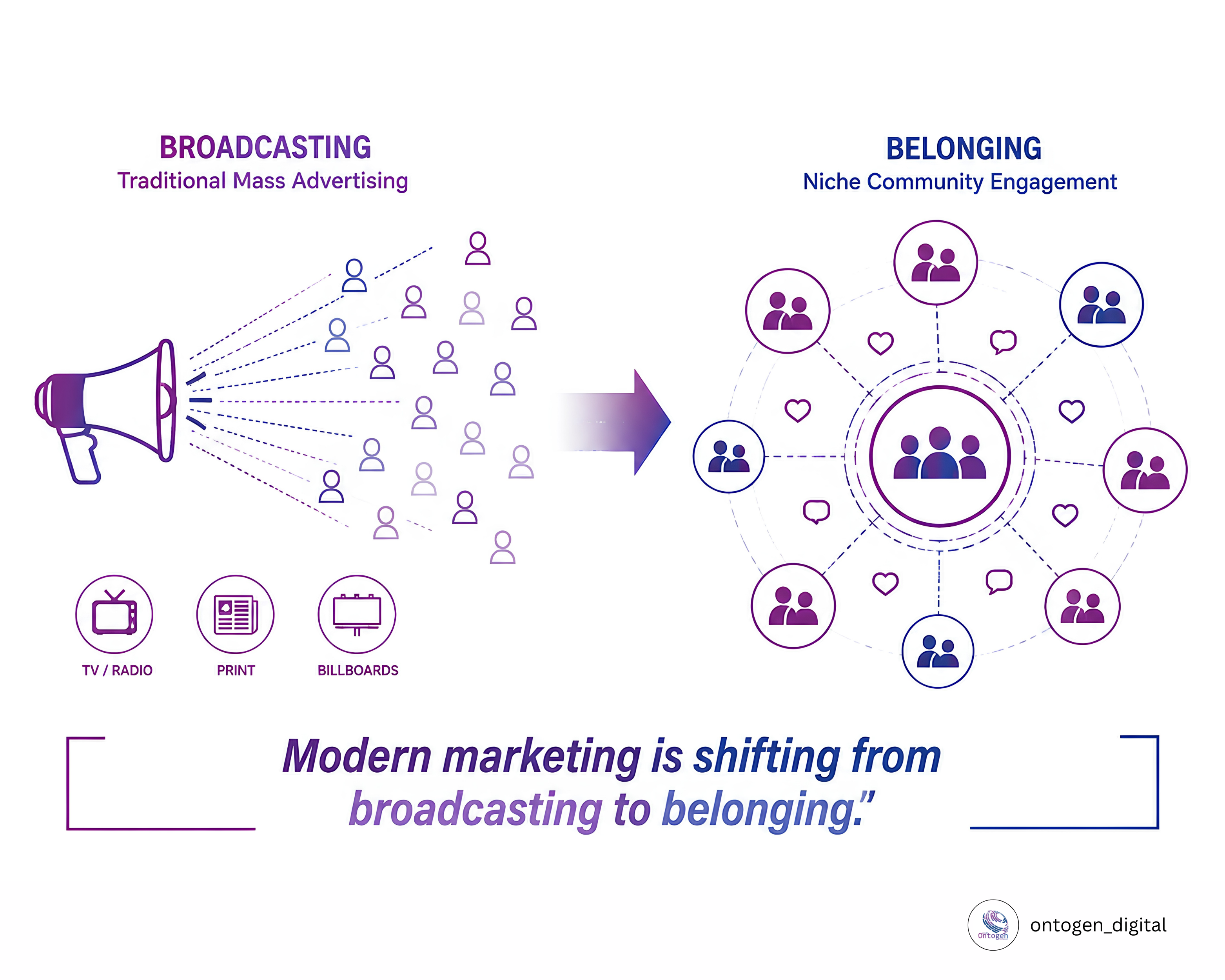
For years, digital marketing followed a predictable formula: reach as many people as possible, create broad messaging, and hope enough of the audience converts.
That strategy worked when attention was abundant.
Today, attention is fragmented.
Consumers no longer gather around a few major media channels. Instead, they spend their time inside highly specific digital communities built around shared interests, behaviors, identities, aesthetics, hobbies, and values. These communities exist everywhere: Reddit threads, niche TikTok circles, Discord servers, creator ecosystems, Instagram subcultures, gaming communities, fitness groups, sustainability spaces, parenting forums, and even highly specialized LinkedIn conversations.
This shift is changing the way modern brands grow.
The most successful businesses in 2026 are no longer trying to speak to "everyone." They are building influence inside smaller, deeply engaged communities that already trust each other.
In other words, marketing is shifting from broadcasting to belonging.
For small businesses, startups, and emerging brands, this is one of the biggest opportunities in modern digital marketing. You no longer need the budget of a global corporation to compete. You need relevance, cultural understanding, and the ability to connect with the right audience at the right depth.
At Ontogen Digital, we've seen this transformation firsthand. Brands that focus on niche communities often generate stronger engagement, lower acquisition costs, higher retention, and more authentic brand loyalty compared to businesses chasing mass visibility without strategic audience alignment.
This blog explores:
Why niche audiences are becoming the center of modern marketing
How brands can identify untapped communities
A practical framework for choosing the right niche
Real-world examples from US and Indian brands
Common mistakes businesses make
Future trends shaping community-first marketing in 2026
How Ontogen Digital helps brands build scalable niche-driven strategies
If your brand still relies on generic content designed for "everyone," you may already be losing attention to competitors that understand the power of micro-cultures.
The End of Generic Marketing
Consumers are overwhelmed.
Every day, users encounter thousands of advertisements, promotional posts, influencer collaborations, emails, reels, and sponsored recommendations. As digital competition increases, generic messaging becomes easier to ignore.
Modern audiences are developing "content blindness."
Broad statements like the following:
"We provide quality service."
"Best products at affordable prices"
"Your trusted solution"
"We care about our customers."
have become invisible because every brand says the same thing.
Niche marketing works because it creates specificity.
Specificity creates relatability.
Relatability creates trust.
Trust creates conversions.
When people feel that a brand genuinely understands their lifestyle, interests, struggles, or identity, engagement becomes natural.
This explains why smaller creator-led brands are outperforming massive corporations in engagement rates across platforms like TikTok, Instagram, and YouTube.
Consumers increasingly prefer:
Brands that understand their identity
Communities over corporations
Shared values over polished advertising
Conversation over promotion
Authenticity over scale
Research across consumer psychology and behavioral marketing consistently shows that people form stronger emotional connections with brands that reflect their personal worldview.
That emotional relevance matters more today than broad reach.
Why Niche Audiences Matter More Than Ever
The future of marketing belongs to brands that create depth instead of chasing surface-level attention.
Deeper Emotional Connection
Niche audiences are more emotionally invested because the content directly aligns with their interests and lifestyle.
For example:
A vegan fitness community
Sustainable fashion enthusiasts
Indie gaming creators
Remote-working entrepreneurs
Home coffee brewing hobbyists
Women-led startup founders
Minimalist productivity communities
These audiences already share internal culture, language, humor, frustrations, and buying behavior.
When a brand enters thoughtfully, engagement feels natural instead of forced.
This creates:
Higher trust
Better engagement
Increased repeat purchases
Stronger word-of-mouth marketing
Long-term brand advocacy
In many cases, smaller communities outperform broader audiences in actual revenue efficiency.
Competitive Advantage in Saturated Markets
Mass-market digital advertising has become expensive and highly competitive.
Large brands dominate generic keywords, broad targeting, and mainstream attention.
But niche positioning creates differentiation.
Instead of competing broadly in "fitness," a brand may dominate:
Fitness for new mothers
Strength training for women over 40
Home workouts for gamers
Mobility-focused fitness for desk workers
This precision lowers competition and improves messaging relevance.
Small businesses especially benefit because niche authority is easier to build than mass authority.
Community-Led Content Performs Better
Modern social algorithms reward engagement quality, not just follower count.
Platforms increasingly prioritize:
Saves
Shares
Comments
Watch time
Conversation depth
Community participation
Community-driven content naturally performs better because it creates emotional participation.
A highly engaged niche audience often generates:
Better organic reach
Stronger user-generated content
Lower paid advertising costs
Better retention
More authentic referrals
This is one reason why creator partnerships inside niche ecosystems outperform many traditional celebrity campaigns.
Read Also: Best Social Media Management Tools for Businesses in 2026
The Three-Step Framework for Choosing the Right Niche
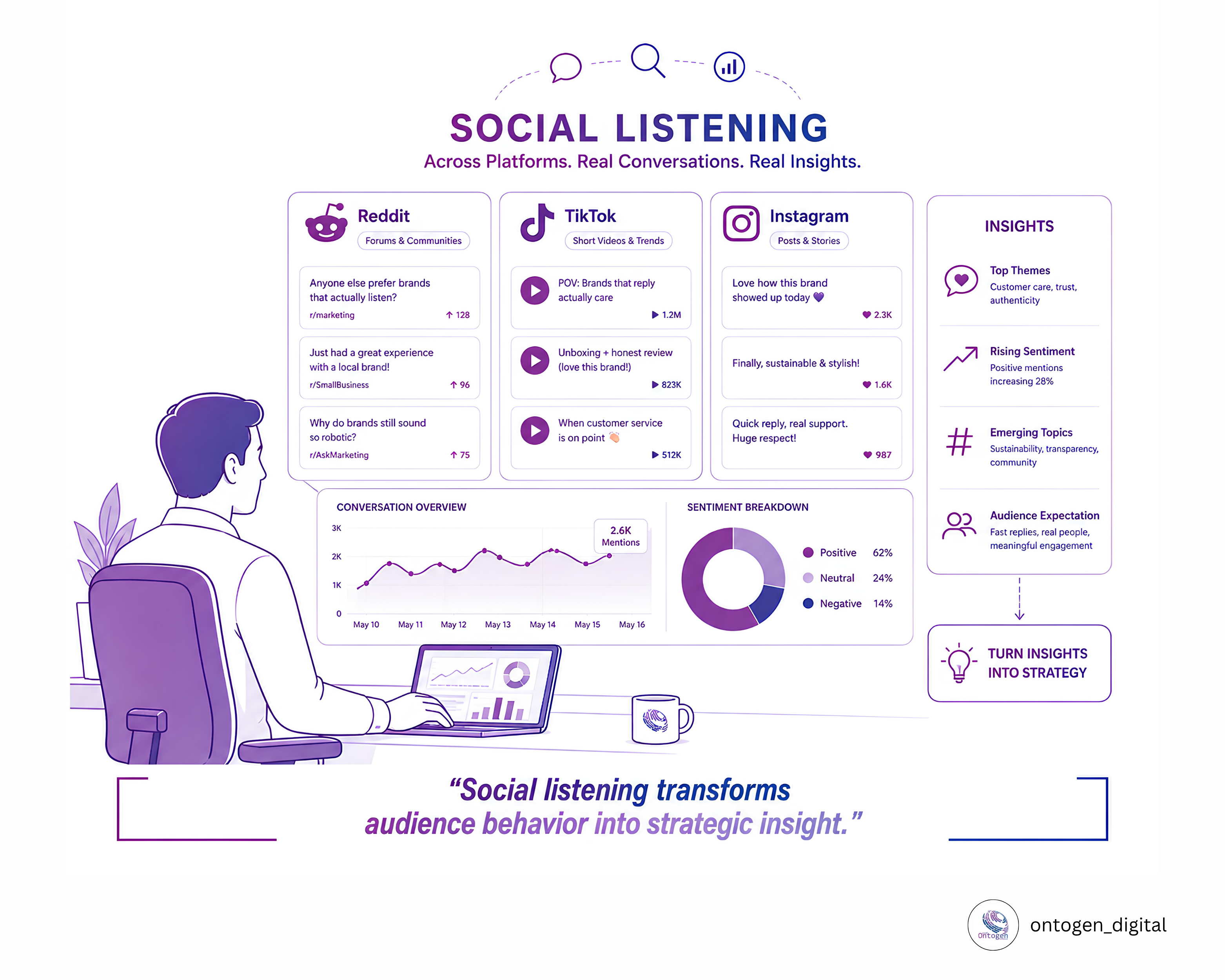
Many businesses understand the importance of niche marketing but struggle to identify where they should focus.
Choosing a niche is not about randomly targeting smaller audiences.
It requires strategic alignment.
Here is a practical framework businesses can use.
Step 1: Brand Alignment
The first question is simple:
Does this community genuinely align with your brand identity, mission, or values?
Authenticity matters.
Communities quickly reject brands that enter spaces purely for attention without understanding the culture.
A strong example is Oatly.
Oatly didn't just market oat milk products. The brand embedded itself into conversations around sustainability, plant-based lifestyles, ethical consumption, and environmental awareness.
Its audience alignment was cultural, not transactional.
For smaller businesses, this matters even more.
A skincare brand targeting eco-conscious Gen Z audiences cannot simply "pretend" to care about sustainability. The audience will investigate sourcing, packaging, messaging consistency, creator partnerships, and brand behavior.
Ask:
What does our brand genuinely stand for?
Which communities already align with those values?
What emotional needs do we solve?
What identity does our product support?
Alignment creates long-term credibility.
Step 2: Growth Potential
Not every niche is worth pursuing.
Some communities are growing rapidly.
Others are shrinking or oversaturated.
Businesses should evaluate:
Search trend growth
Community engagement levels
Emerging creators
Industry conversations
Content demand
Influencer ecosystems
Platform momentum
This is where social listening becomes critical.
For example, brands that identified the rise of functional wellness, creator entrepreneurship, AI productivity, mindful fitness, sustainable fashion, gaming creators, and remote work culture early were able to establish authority before competition intensified.
A growing niche usually has:
Active creators
Frequent conversations
Audience participation
Organic content demand
Shared cultural identity
The goal is not simply entering a niche.
The goal is entering a niche early enough to become recognizable within it.
Step 3: Find the "Blank Space"
This is where strategic opportunity exists.
Ask:
Are competitors already dominating this space, or is the audience currently underserved?
The biggest opportunities often exist in overlooked micro-communities.
For example:
A coffee company competing broadly against global brands may struggle.
But targeting specialty home brewers, productivity-focused remote workers, sustainable coffee enthusiasts, travelers seeking portable brewing, and late-night creative professionals creates differentiation.
This "blank space" strategy allows smaller brands to own highly specific emotional territory before competitors notice the opportunity.
In many cases, the niche itself becomes the brand's moat.
How to Find Niche Audiences Using Social Listening
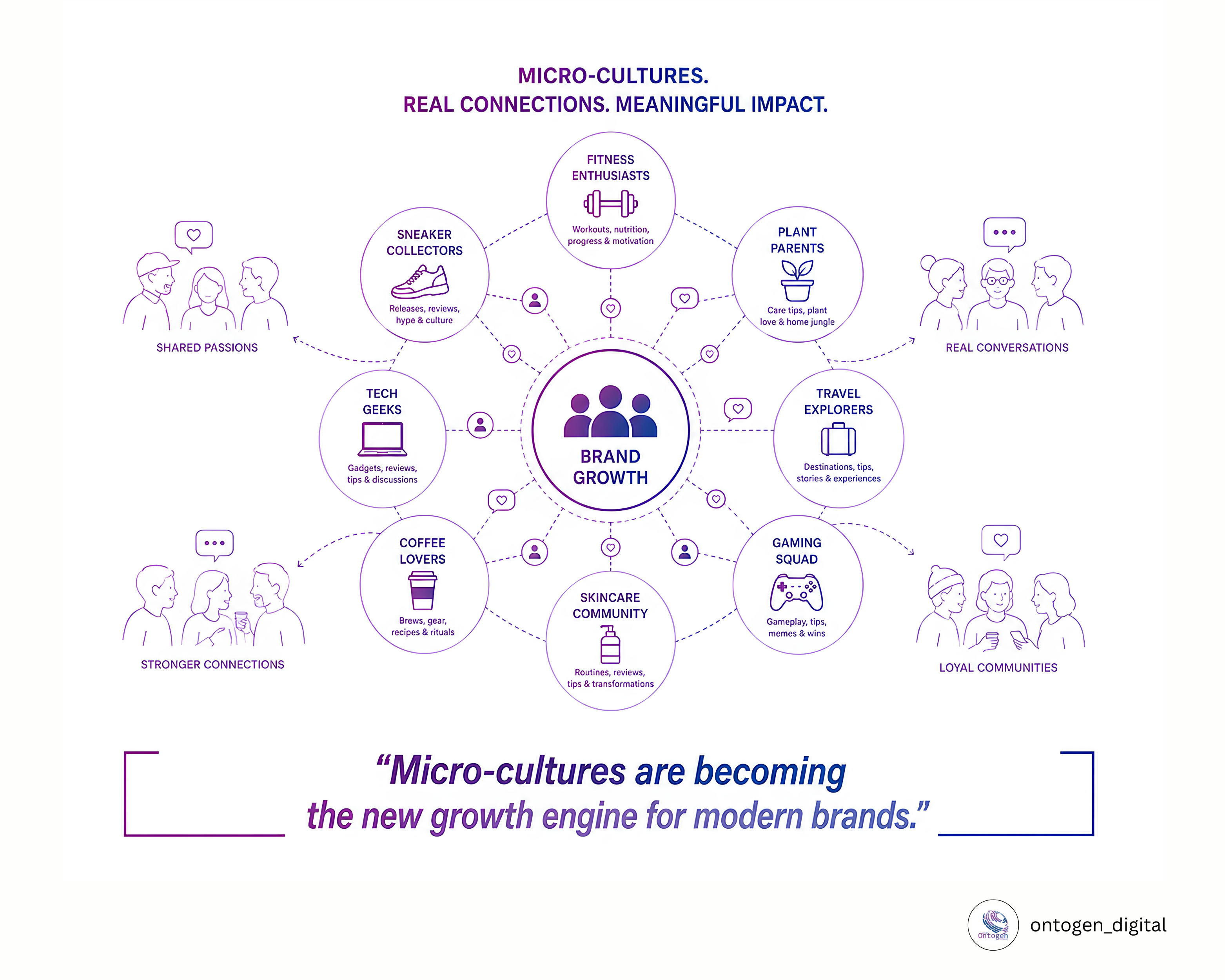
One of the biggest mistakes businesses make is assuming they already understand their audience.
Real audience behavior is often very different from internal assumptions.
This is why listening matters more than guessing.
Social Listening Is Active Research
Social listening is not passive observation.
It is a research-driven strategy used to analyze conversations, sentiment, behaviors, frustrations, recommendations, language patterns, and emotional triggers.
Modern AI-powered social listening tools allow brands to monitor Reddit discussions, TikTok comments, Instagram mentions, YouTube discussions, creator collaborations, product reviews, and trending subcultures.
The goal is to identify:
what audiences truly care about
how they describe problems
what language they use naturally
which creators influence them
what emotional themes repeat consistently
This insight improves everything: SEO, content strategy, paid ads, creative direction, messaging, influencer selection, and website copy.
Lean Into Existing Audience Insights
Many businesses already have valuable niche insights hidden inside their existing audience data.
Your followers, customers, and engagement analytics often reveal emerging audience clusters.
For example, a fitness brand may discover unexpectedly high engagement from women in tech, remote workers, college athletes, busy fathers, or beginner lifters over 35.
Each represents a possible niche direction.
The smartest brands study patterns instead of chasing trends blindly.
Go Where the Community Already Exists
Different communities live on different platforms.
This matters enormously.
A strategy that works on Instagram may completely fail on Reddit or TikTok.
For example:
Reddit communities value transparency and depth
TikTok rewards relatability and cultural awareness
LinkedIn favors professional insights
Discord communities prioritize interaction
YouTube communities value education and storytelling
Brands must adapt communication style without losing brand consistency.
This is why niche influencer collaborations are so effective.
Creators already understand community behavior, language, humor, emotional triggers, and platform expectations.
The right creator partnership acts as a bridge between brand and community.
Read Also: How to Build a Simple Marketing Workflow That Doesn't Break
Case Study: How a US Outdoor Apparel Brand Unlocked Growth Through Niche Positioning
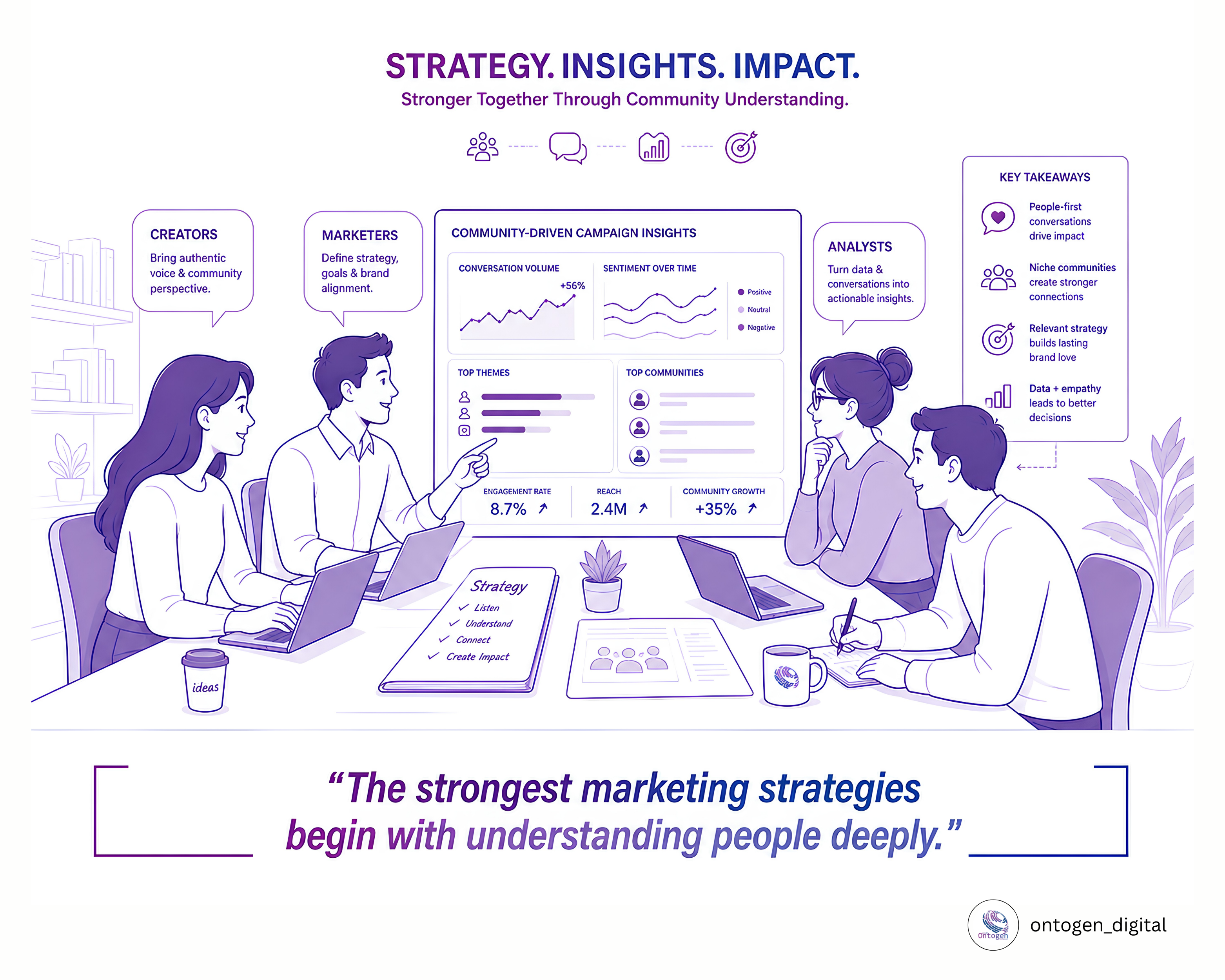
A small US-based outdoor apparel startup found itself in a challenging position. Despite offering quality products, it struggled to compete against larger fitness and lifestyle brands with bigger budgets and stronger brand recognition. Like many growing businesses, the company initially targeted a broad audience of "fitness enthusiasts," hoping to attract anyone interested in an active lifestyle.
However, the results remained underwhelming. The brand faced several common growth challenges: low advertising efficiency despite consistent campaign spending, weak brand recall in a crowded market, inconsistent engagement across social platforms, and limited differentiation from larger competitors.
Instead of increasing their marketing budget, the company decided to investigate who was actually engaging with their content and purchasing their products. Through audience analysis, customer feedback, and social listening, they discovered an unexpected trend. A significant portion of their most engaged customers were remote workers, digital nomads, freelancers, and outdoor enthusiasts who frequently combined work, travel, and adventure.
This insight completely changed their marketing strategy.
Rather than positioning themselves as another outdoor apparel brand, they began building content around the lifestyle their audience aspired to live. Their messaging shifted from product features to themes of freedom, flexibility, remote work, and exploration. The brand partnered with outdoor freelancers and travel-focused creators, shared stories of people working from national parks and mountain destinations, and created content that reflected the realities of location-independent living.
The shift wasn't about changing the product — it was about changing the story around the product.
Instead of selling jackets, backpacks, and apparel, the company began selling an identity. Customers saw themselves reflected in the brand's content, making the connection far more emotional than transactional.
Within eight months, the company experienced measurable improvements across key marketing metrics: higher engagement rates across social channels, stronger customer retention and repeat purchases, lower customer acquisition costs, increased user-generated content and community participation, and greater organic reach driven by audience advocacy.
The most valuable outcome wasn't simply improved performance metrics. The brand successfully carved out a unique position within a specific community that larger competitors had largely overlooked. By speaking directly to the needs, aspirations, and lifestyle of a well-defined audience, they transformed from just another apparel company into a brand that represented a way of life.
This case study highlights a critical lesson for modern marketers: sustainable growth often comes from understanding a smaller audience more deeply, rather than trying to appeal to everyone. When customers feel understood and represented, loyalty grows naturally, marketing becomes more efficient, and the brand earns a competitive advantage that is difficult to replicate.
Indian Brand Example: Community-Led Growth
Indian D2C brands are also increasingly leveraging micro-community marketing.
A strong example is The Whole Truth. Rather than competing broadly in the crowded nutrition category, the brand focused heavily on ingredient transparency, fitness-conscious consumers, health-aware millennials, and clean eating communities. Its communication style avoided corporate jargon and instead leaned into authenticity, education, and honest labeling. The result: the community itself became a growth engine.
Another example is boAt. Instead of targeting "everyone," boAt strategically positioned itself around youth culture, creators, music, gaming, and lifestyle-driven identities. Its partnerships, creator collaborations, and visual identity aligned with a very specific consumer tribe. This helped the brand grow rapidly despite intense competition.
The lesson is clear: Brands grow faster when audiences feel culturally connected.
Maintaining Brand Voice Across Different Niches
One challenge businesses face when targeting multiple niche communities is maintaining consistency.
Without structure, brands can become inconsistent, confusing, or inauthentic.
Create a Brand Guardrail Document
Every business should define what the brand stands for, what tone it uses, what language feels authentic, what topics are off-limits, how humor is handled, and what emotional positioning the brand maintains.
Knowing what NOT to say is equally important.
This creates consistency even while adapting messaging for different communities.
For example, a premium wellness brand may avoid aggressive sales language, meme-heavy humor, and controversy-driven marketing while still adapting platform style naturally.
Use Comments as a Testing Ground
Comment sections are underrated research spaces.
They allow brands to test messaging, observe emotional reactions, understand audience tone, and identify emerging conversations.
Instead of treating comments as customer support, modern brands use them strategically.
Many viral social brands build audience loyalty directly through comment interaction.
This creates familiarity, relatability, community participation, and emotional connection.
In many cases, comments reveal better content opportunities than formal strategy meetings.
Measuring Success Beyond Vanity Metrics
Traditional marketing often overemphasized impressions and follower counts.
Community-driven marketing requires deeper measurement.
Sentiment Analysis Matters
AI-powered sentiment analysis tools help brands understand emotional response, audience perception, brand trust trends, and community reaction quality.
Positive sentiment often predicts long-term retention better than short-term reach.
Quantitative Metrics
Track engagement rates, community growth, conversion rates, click-through rates, retention, repeat purchases, branded search growth, and creator collaboration performance.
But context matters. A niche audience of 20,000 highly engaged users can outperform a passive audience of 500,000.
Qualitative Metrics Matter More Than Ever
Some of the most valuable insights come from Reddit discussions, DMs, customer reviews, creator feedback, audience screenshots, and comment tone.
These signals reveal emotional resonance.
When communities begin discussing your brand organically, you move beyond advertising into cultural relevance.
That is where sustainable growth begins.
Common Mistakes Brands Make With Niche Marketing
Not every niche strategy succeeds.
Several common mistakes consistently limit results.
Mistake 1: Choosing Trends Instead of Communities
Trends fade quickly. Communities last longer. Brands that chase viral trends without deeper audience understanding often struggle with consistency and retention.
Mistake 2: Entering Communities Without Research
Communities can detect performative marketing immediately. Brands that fail to understand audience language, values, or behavior often face backlash or indifference.
Mistake 3: Over-Segmenting Too Early
Some businesses niche down so aggressively that the audience becomes too small to scale effectively. Balance matters. The goal is focused positioning, not unnecessary limitation.
Mistake 4: Prioritizing Reach Over Resonance
Viral visibility does not guarantee brand loyalty. Many brands gain temporary attention but fail to build emotional connection. Niche marketing succeeds because of relevance, not scale alone.
Read Also: How AI Automation Improving Marketing Agency Efficiency for Business Growth
Future Trends: Where Community Marketing Is Headed in 2026
The next phase of digital marketing will become even more community-centric.
Several major trends are already emerging.
AI-Powered Community Intelligence
AI tools will increasingly help brands identify emerging micro-cultures, audience sentiment shifts, behavioral patterns, creator ecosystems, and content gaps. This will make social listening more predictive instead of reactive.
Creator-Led Commerce
Creators are becoming trusted community leaders. Brands will increasingly collaborate with micro-influencers, educators, niche creators, industry experts, and community moderators. Smaller creators often drive stronger trust than celebrity influencers.
Community-Owned Branding
Audiences increasingly want participation. Brands that invite community feedback on product design, campaigns, storytelling, and collaborations will build stronger loyalty.
Search Behavior Is Changing
Traditional SEO is evolving beyond keywords. Consumers increasingly search through TikTok, Reddit, YouTube, creator recommendations, and AI-generated search summaries. This means brands must optimize not only for Google but also for community discovery ecosystems.
This is where integrated strategies become critical.
How Ontogen Digital Helps Brands Find Untapped Communities
At Ontogen Digital, we believe modern marketing is not about posting more content.
It is about building strategic relevance.
Our approach focuses on helping brands identify the right audience ecosystems, understand behavioral patterns, and create campaigns that connect authentically.
Through our SEO Services, PPC & Advertising Solutions, Content Marketing Strategies, Web Development Services, and Personalized Marketing Strategy Solutions, we help businesses uncover untapped audience opportunities, improve messaging clarity, build scalable marketing systems, create higher-converting campaigns, and strengthen long-term audience trust.
We combine audience research, SEO intelligence, creative storytelling, conversion-focused strategy, and data-backed decision-making to help brands grow sustainably instead of relying on guesswork.
The brands winning today are not necessarily the loudest.
They are the most understood.
Strategic Takeaways for Businesses
If there is one major lesson from the rise of micro-cultures, it is this:
Modern marketing rewards relevance more than reach.
Businesses should stop asking "How do we reach more people?" and start asking "Which people will care deeply enough to stay?"
That shift changes everything.
The future belongs to brands that understand community behavior, listen actively, participate authentically, prioritize trust, adapt strategically, and create emotional relevance.
Mass appeal is becoming less effective.
Micro-community relevance is becoming the new growth engine.
Frequently Asked Questions
What is niche marketing?
Niche marketing focuses on targeting a specific audience segment with tailored messaging, products, and content rather than appealing to a broad audience.
Why are micro-communities important in marketing?
Micro-communities create stronger engagement, trust, and emotional loyalty because audiences feel personally understood and represented.
How can small businesses identify niche audiences?
Businesses can use social listening, audience analytics, customer feedback, and engagement patterns to identify underserved communities.
Does niche marketing improve ROI?
Yes. Niche marketing often improves conversion rates, lowers acquisition costs, and increases customer retention because messaging is more relevant.
What platforms work best for niche marketing?
It depends on the audience. Reddit, TikTok, Instagram, Discord, YouTube, and LinkedIn each serve different types of communities.
How important is social listening in modern marketing?
Social listening is essential because it helps brands understand real audience behavior, emotional triggers, and emerging trends.
Can niche marketing work for traditional businesses?
Absolutely. Even local businesses can target highly specific customer groups based on lifestyle, interests, values, or behavior patterns.
Conclusion
The digital landscape is changing rapidly. Consumers no longer want generic advertising designed for the masses. They want relevance, connection, identity, and community.
Brands that continue relying on broad, impersonal marketing strategies will increasingly struggle to maintain attention and loyalty.
Meanwhile, businesses that invest in understanding niche communities will build stronger relationships, better engagement, and more sustainable growth.
The opportunity is no longer about being everywhere.
It is about being deeply relevant somewhere.
At Ontogen Digital, we help businesses move beyond assumptions and build marketing strategies backed by real audience intelligence, behavioral insights, and data-driven execution.
If you're ready to identify untapped communities, strengthen audience connection, and build a smarter digital growth strategy, now is the time to stop guessing and start listening.
Explore our services or connect with our team to build a marketing strategy designed for the future of digital engagement.